The Rainbow of International Alerts: Understanding Every Type of INTERPOL Notice
📋 On This Page
An Indian tech founder, living in Singapore, was stopped at airport immigration in January 2026. He was shocked to discover an INTERPOL Red Notice had been issued against him by Indian authorities over a business dispute. He had no idea. Provisionally detained, his legal team in India had to scramble, immediately challenging both the notice and the underlying domestic arrest warrant to stop his extradition.
INTERPOL’s color-coded notices are a global language for law enforcement. Each color serves a distinct purpose. They aren’t international arrest warrants, but global alerts, enabling police in 196 member countries to share critical information on everything from wanted fugitives (Red Notice) to missing persons (Yellow Notice) and even potential threats (Orange Notice). In India, only one agency—the National Central Bureau, handled by the Central Bureau of Investigation (CBI)—can request that INTERPOL issue a notice on the country’s behalf.
INTERPOL Notice – An international alert circulated by INTERPOL to communicate information about crimes, criminals, and threats from a member country’s police to their counterparts around the world. All notices are published by INTERPOL’s General Secretariat at the request of a member country and must comply with INTERPOL’s Constitution and its Rules on the Processing of Data (RPD).

What Exactly Is an INTERPOL Notice and How Does It Work?
At its core, an INTERPOL Notice is a request for international police cooperation. A member country, through its National Central Bureau (NCB), asks other members to take a specific action or share information. India’s designated point of contact for all things INTERPOL is the CBI, which acts as its NCB.
When an Indian state police force or other law enforcement agency wants a notice issued, they must go through the CBI. Once the CBI sends the request, INTERPOL’s General Secretariat conducts a compliance review. Its primary job is to check if the request violates any rules, especially Article 3 of its Constitution. This article strictly forbids INTERPOL from getting involved in activities of a political, military, religious, or racial character. A request for a notice against a political opponent, for example, would be rejected on this basis. If the request is compliant, the notice is published and sent out to all 196 member countries.
This color-coded system makes the purpose of each notice instantly clear. An officer at a border checkpoint in Delhi or an investigator in Mumbai knows immediately whether they are dealing with a wanted person, a missing child, or a warning about an imminent criminal threat.
The “Most Wanted”: What Makes a Red Notice So Serious?
The Red Notice is the most infamous and consequential of INTERPOL’s alerts. It is a request to law enforcement worldwide to find and provisionally arrest someone pending extradition, surrender, or similar legal action. The fallout is immediate and severe. Arrests at international borders. Frozen bank accounts. The start of complex extradition proceedings.
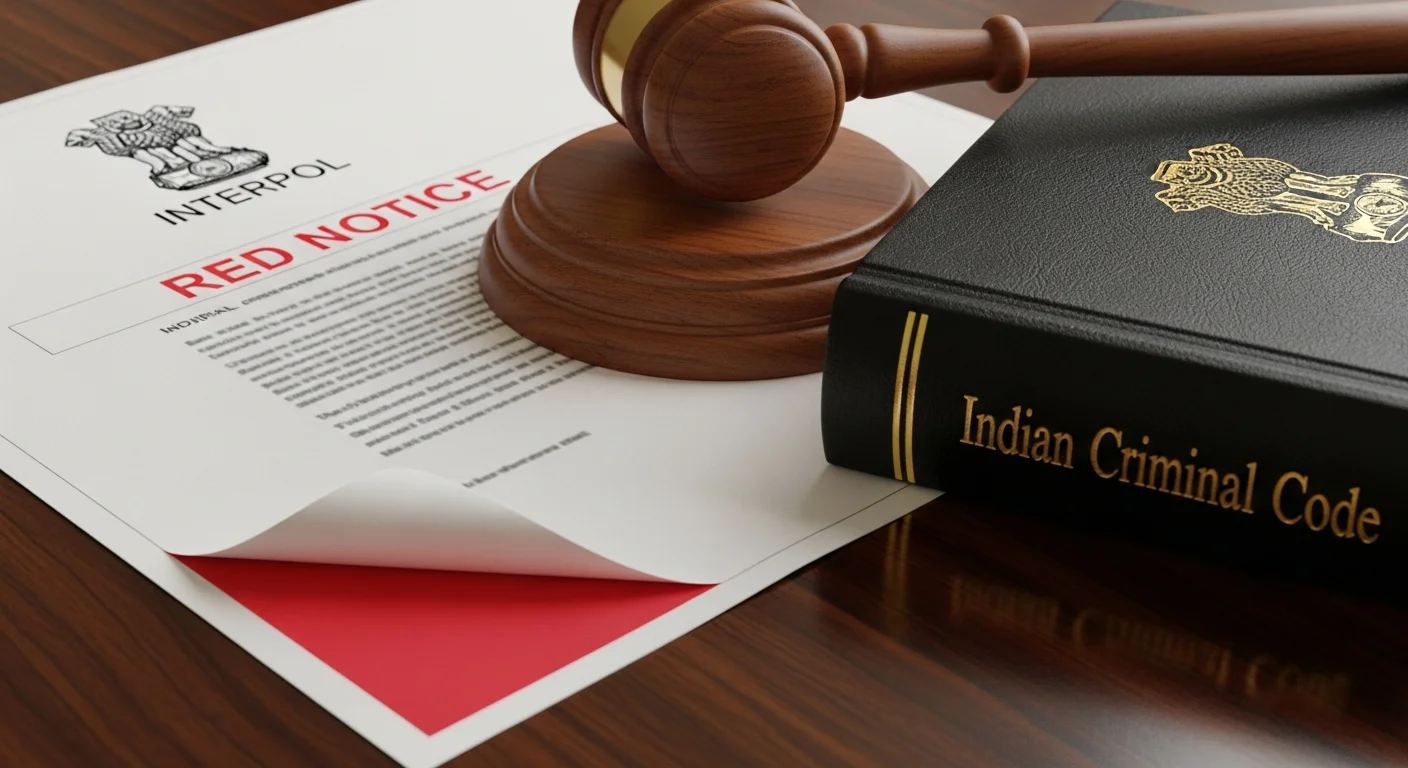
Still, a Red Notice is not an arrest warrant. It’s a pointer. It must be built on the foundation of a valid, domestic arrest warrant or court order issued by the requesting country’s judicial authorities. For a Red Notice coming from India, this foundation is almost always a non-bailable warrant issued by a Magistrate or a higher court.
Because they carry such a heavy impact on a person’s liberty and freedom of movement, Red Notices are ripe for misuse. Thankfully, you can fight one. Individuals can challenge a notice by filing a request with the Commission for the Control of INTERPOL’s Files (CCF), an independent body that reviews whether the notice actually complies with INTERPOL’s own rules.
How long does an INTERPOL Red Notice last?
An INTERPOL Red Notice is valid for five years. After that, it expires. However, the requesting country’s NCB can ask for it to be renewed, but only if the original national arrest warrant is still active. If the notice isn’t renewed, it’s automatically purged from INTERPOL’s databases.
What happens when you have an INTERPOL Red Notice?
If you’re the subject of a Red Notice, you face a constant risk of arrest whenever you cross an international border. The arresting country notifies the requesting country (e.g., India), which can then formally request extradition based on its own laws, like the Extradition Act, 1962, and any treaties in place. Your name and details are also flagged in law enforcement databases worldwide, which can cripple your ability to travel and conduct financial transactions.
Is an INTERPOL notice an arrest warrant?
No. An INTERPOL notice, even a Red Notice, is not an international arrest warrant. INTERPOL has no authority to issue them. A Red Notice is simply a request for provisional arrest, made on behalf of a member country that must already have a valid domestic warrant for that person. The legal power for any arrest always comes from the national laws of the country where the arrest is actually made.
Beyond Red: A Guide to the Other Critical INTERPOL Notice Colors
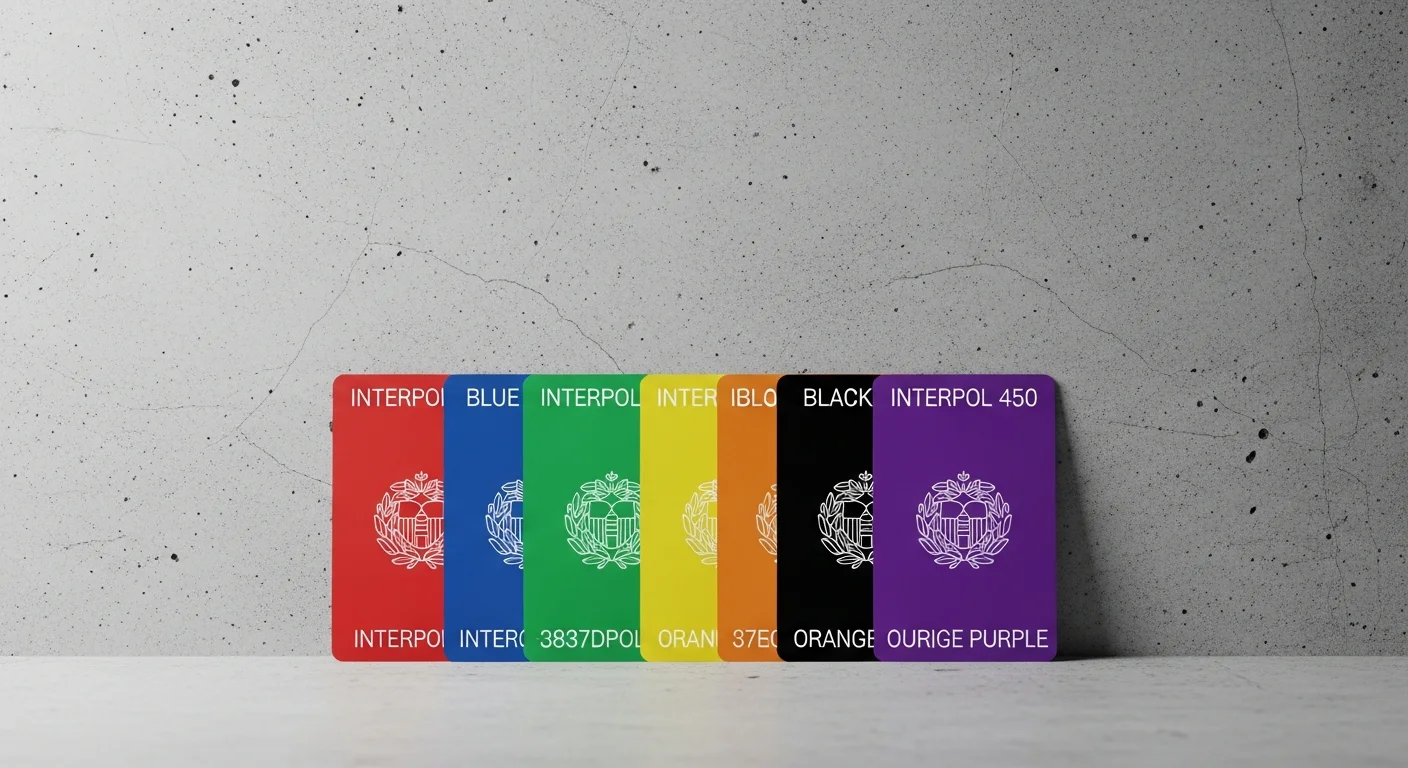
While the Red Notice commands the spotlight, the other colors in INTERPOL’s palette are essential tools for tackling a vast range of international crime and public safety issues. Understanding each one reveals the full scope of INTERPOL’s work.
| Notice Type | Purpose | Who it Targets |
|---|---|---|
| Red Notice | To seek the location and arrest of a person wanted for prosecution or to serve a sentence. | Fugitives facing extradition. |
| Yellow Notice | To help locate missing persons (often minors) or to identify persons unable to identify themselves. | Missing persons, kidnapping victims. |
| Blue Notice | To collect additional information about a person’s identity, location, or activities in a criminal investigation. | Persons of interest in a criminal case. |
| Black Notice | To seek information on unidentified bodies. | Deceased individuals who cannot be identified. |
| Green Notice | To provide warnings about persons who have committed crimes and are likely to re-offend elsewhere. | Known offenders, serial criminals. |
| Orange Notice | To warn of an event, person, or object representing a serious and imminent threat to public safety. | Terrorist threats, dangerous materials, bombs. |
| Purple Notice | To provide information on the modi operandi (methods) used by criminals. | Criminal networks, organized crime groups. |
The key takeaway is that each notice triggers a different police response. A Yellow Notice prompts welfare checks and identification efforts. A Blue Notice, on the other hand, leads to surveillance and information gathering, not arrest.
What is a Blue Notice from INTERPOL?
A Blue Notice is an “inquiry” notice. Its purpose is to gather more information about a person’s identity, movements, or criminal activities as part of an ongoing investigation. Critically, it is not a request for arrest. For instance, Indian police might ask for a Blue Notice to trace the whereabouts of a suspected accomplice in a financial fraud case who has gone abroad.
What does a Yellow Notice mean?
A Yellow Notice is a global cry for help in finding missing persons. It is frequently used to locate children who have been abducted or run away, but it’s just as applicable to adults who have vanished under mysterious circumstances. It can also be a tool to help identify someone who is found alive but cannot identify themselves, like an amnesia victim.
What is an INTERPOL Green Notice?
Think of a Green Notice as a global “be on the lookout” intelligence brief. It’s issued to warn police in member countries about a person who has committed crimes and is considered likely to do so again in other countries. This alert is often used for serial offenders or individuals tied to transnational organized crime, telling authorities to keep an eye on them if they ever enter their jurisdiction.
What Are the New and Specialized INTERPOL Notices?
INTERPOL’s system isn’t frozen in time; it evolves to address new global security threats. Two specialized notices were created to handle specific international concerns that go beyond traditional fugitive hunting.
The INTERPOL–United Nations Security Council Special Notice targets groups and individuals subject to UN sanctions, particularly those related to terrorism (like Al-Qaida or ISIL) and other threats to global peace. This notice compels member countries to enforce those sanctions, which often include asset freezes and travel bans.

More recently, INTERPOL rolled out the Silver Notice on a pilot basis. This new alert is laser-focused on helping member countries locate and recover stolen assets gained through crime. It supports international efforts to trace, freeze, and confiscate criminal proceeds—a tool especially relevant in cases under India’s Fugitive Economic Offenders Act, 2018.
How Can an INTERPOL Notice Be Challenged or Removed?
Anyone subject to an INTERPOL notice has the right to challenge it. The main venue for this fight is the Commission for the Control of INTERPOL’s Files (CCF), an independent body that acts as a watchdog, ensuring all data processing by INTERPOL follows its own rulebook.
A challenge is usually filed on grounds that the notice breaks INTERPOL’s own regulations. The most powerful arguments include:
- Article 3 Violation: Argues the case is mainly political, military, religious, or racial. A notice issued against a political dissident is a classic example.
- Article 2 Violation: The case fails to respect the Universal Declaration of Human Rights.
- It lacks a valid legal basis: Maybe the domestic arrest warrant was cancelled, or the entire matter is a private civil or family dispute, not a serious crime that warrants an international alert.
The process starts by submitting a detailed legal argument with supporting evidence to the CCF. The request is confidential, and importantly, there is no fee to file. The CCF’s review can take several months, so while you wait for a decision on deleting the notice, you must plan for the real-world consequences of it remaining active, like travel disruptions and banking difficulties.
Challenging the CCF isn’t enough. You must also attack the notice’s legal roots in the country that requested it. In India, this means filing a writ petition before the appropriate High Court under Article 226 of the Constitution. The goal is to quash the domestic case or any associated Look Out Circular tied to the INTERPOL notice. This two-front battle is critical; winning at the CCF is difficult if the domestic case remains strong, and vice-versa.
⚠️ Time is critical — every day matters
Get a free case assessment
Our team specialises in cases with an international element. We review applicable treaties, assess risks, and prepare an action plan.
Frequently Asked Questions About INTERPOL Notices
An INTERPOL Red Notice is valid for five years. After that, it expires. However, the requesting country’s NCB can ask for it to be renewed, but only if the original national arrest warrant is still active. If the notice isn’t renewed, it’s automatically purged from INTERPOL’s databases.
If you’re the subject of a Red Notice, you face a constant risk of arrest whenever you cross an international border. The arresting country notifies the requesting country (e.g., India), which can then formally request extradition based on its own laws, like the Extradition Act, 1962, and any treaties in place. Your name and details are also flagged in law enforcement databases worldwide, which can cripple your ability to travel and conduct financial transactions.
No. An INTERPOL notice, even a Red Notice, is not an international arrest warrant. INTERPOL has no authority to issue them. A Red Notice is simply a request for provisional arrest, made on behalf of a member country that must already have a valid domestic warrant for that person. The legal power for any arrest always comes from the national laws of the country where the arrest is actually made.
Beyond Red: A Guide to the Other Critical INTERPOL Notice Colors
While the Red Notice commands the spotlight, the other colors in INTERPOL’s palette are essential tools for tackling a vast range of international crime and public safety issues. Understanding each one reveals the full scope of INTERPOL’s work.
| Notice Type | Purpose | Who it Targets |
|---|---|---|
| Red Notice | To seek the location and arrest of a person wanted for prosecution or to serve a sentence. | Fugitives facing extradition. |
| Yellow Notice | To help locate missing persons (often minors) or to identify persons unable to identify themselves. | Missing persons, kidnapping victims. |
| Blue Notice | To collect additional information about a person’s identity, location, or activities in a criminal investigation. | Persons of interest in a criminal case. |
| Black Notice | To seek information on unidentified bodies. | Deceased individuals who cannot be identified. |
| Green Notice | To provide warnings about persons who have committed crimes and are likely to re-offend elsewhere. | Known offenders, serial criminals. |
| Orange Notice | To warn of an event, person, or object representing a serious and imminent threat to public safety. | Terrorist threats, dangerous materials, bombs. |
| Purple Notice | To provide information on the modi operandi (methods) used by criminals. | Criminal networks, organized crime groups. |
The key takeaway is that each notice triggers a different police response. A Yellow Notice prompts welfare checks and identification efforts. A Blue Notice, on the other hand, leads to surveillance and information gathering, not arrest.
A Blue Notice is an “inquiry” notice. Its purpose is to gather more information about a person’s identity, movements, or criminal activities as part of an ongoing investigation. Critically, it is not a request for arrest. For instance, Indian police might ask for a Blue Notice to trace the whereabouts of a suspected accomplice in a financial fraud case who has gone abroad.
A Yellow Notice is a global cry for help in finding missing persons. It is frequently used to locate children who have been abducted or run away, but it’s just as applicable to adults who have vanished under mysterious circumstances. It can also be a tool to help identify someone who is found alive but cannot identify themselves, like an amnesia victim.
Think of a Green Notice as a global “be on the lookout” intelligence brief. It’s issued to warn police in member countries about a person who has committed crimes and is considered likely to do so again in other countries. This alert is often used for serial offenders or individuals tied to transnational organized crime, telling authorities to keep an eye on them if they ever enter their jurisdiction.
What Are the New and Specialized INTERPOL Notices?
INTERPOL’s system isn’t frozen in time; it evolves to address new global security threats. Two specialized notices were created to handle specific international concerns that go beyond traditional fugitive hunting.
The INTERPOL–United Nations Security Council Special Notice targets groups and individuals subject to UN sanctions, particularly those related to terrorism (like Al-Qaida or ISIL) and other threats to global peace. This notice compels member countries to enforce those sanctions, which often include asset freezes and travel bans.
More recently, INTERPOL rolled out the Silver Notice on a pilot basis. This new alert is laser-focused on helping member countries locate and recover stolen assets gained through crime. It supports international efforts to trace, freeze, and confiscate criminal proceeds—a tool especially relevant in cases under India’s Fugitive Economic Offenders Act, 2018.
How Can an INTERPOL Notice Be Challenged or Removed?
Anyone subject to an INTERPOL notice has the right to challenge it. The main venue for this fight is the Commission for the Control of INTERPOL’s Files (CCF), an independent body that acts as a watchdog, ensuring all data processing by INTERPOL follows its own rulebook.
A challenge is usually filed on grounds that the notice breaks INTERPOL’s own regulations. The most powerful arguments include:
- Article 3 Violation: Argues the case is mainly political, military, religious, or racial. A notice issued against a political dissident is a classic example.
- Article 2 Violation: The case fails to respect the Universal Declaration of Human Rights.
- It lacks a valid legal basis: Maybe the domestic arrest warrant was cancelled, or the entire matter is a private civil or family dispute, not a serious crime that warrants an international alert.
The process starts by submitting a detailed legal argument with supporting evidence to the CCF. The request is confidential, and importantly, there is no fee to file. The CCF’s review can take several months, so while you wait for a decision on deleting the notice, you must plan for the real-world consequences of it remaining active, like travel disruptions and banking difficulties.
Challenging the CCF isn’t enough. You must also attack the notice’s legal roots in the country that requested it. In India, this means filing a writ petition before the appropriate High Court under Article 226 of the Constitution. The goal is to quash the domestic case or any associated Look Out Circular tied to the INTERPOL notice. This two-front battle is critical; winning at the CCF is difficult if the domestic case remains strong, and vice-versa.
⚠️ Time is critical — every day matters
Get a free case assessment
Our team specialises in cases with an international element. We review applicable treaties, assess risks, and prepare an action plan.
Frequently Asked Questions About INTERPOL Notices
INTERPOL’s main notices are color-coded. Red is for fugitives and Blue is for gathering information. Yellow helps find missing persons. Then you have Black for unidentified bodies, Green for warnings, Orange for imminent threats, and Purple for criminal methods. For individuals facing legal issues, Red and Blue notices are the most common challenges. There are also specialized alerts, like the INTERPOL-UN Security Council Special Notice and the newer Silver Notice for asset recovery.
Don’t even try it with a Red Notice. Travel is incredibly risky and will almost certainly lead to your arrest at an international border. For other notices, like a Blue or Green Notice, you might not be stopped directly. But be warned: it will flag you to law enforcement, meaning you could face intense questioning or surveillance when you land.
Not always. The country that requests the notice gets to decide if it’s public or restricted. Public notices are visible to everyone on INTERPOL’s website. Restricted ones, however, are only shared within the global law enforcement network. This means you might have no idea a notice exists until you’re arrested at a border crossing—a devastating surprise.
Only an official body within a member country can request a notice. They do this through their National Central Bureau (NCB). In India, for example, the CBI serves as the NCB. That request then goes to INTERPOL’s General Secretariat in Lyon, France, which is supposed to review it for compliance with its rules before publishing it to all member countries. This review stage is a critical checkpoint, but requests that seem valid on their face often pass through, placing the burden of proof on the individual to challenge them later.
